Bath textiles · Towel construction
Inside Zero-Twist Towels: How Graccioza Villari Balances Plushness and Absorbency
A towel’s softness begins before it reaches the bathroom. It is shaped by the cotton yarn, the loops that rise from the fabric, and the weight carried by every square metre. Graccioza Villari brings these elements together in a substantial terry towel: open, zero-twist cotton loops, a 730 GSM construction, and a textured surface designed to feel both plush and absorbent.
After a bath or shower, the towel becomes a small landscape of its own. Its loops meet damp skin, take up water, and hold it among thousands of cotton fibers. A towel that feels soft in the hand may owe that sensation to the length and arrangement of its loops, the way its yarn was spun, or the density of its fabric. Those same choices can affect how quickly it absorbs moisture and how long it takes to dry afterward.
Zero-twist towels offer a useful example of this relationship between structure and sensation. In conventional cotton yarn, fibers are twisted together to make a continuous, strong strand. Zero-twist construction uses a different approach: the cotton fibers are left comparatively open rather than tightly twisted into yarn. In a towel pile, that can create loops with an airy, lofty character. The result is often described as exceptionally soft, although the precise feel depends on the towel’s other construction details and how it is cared for.
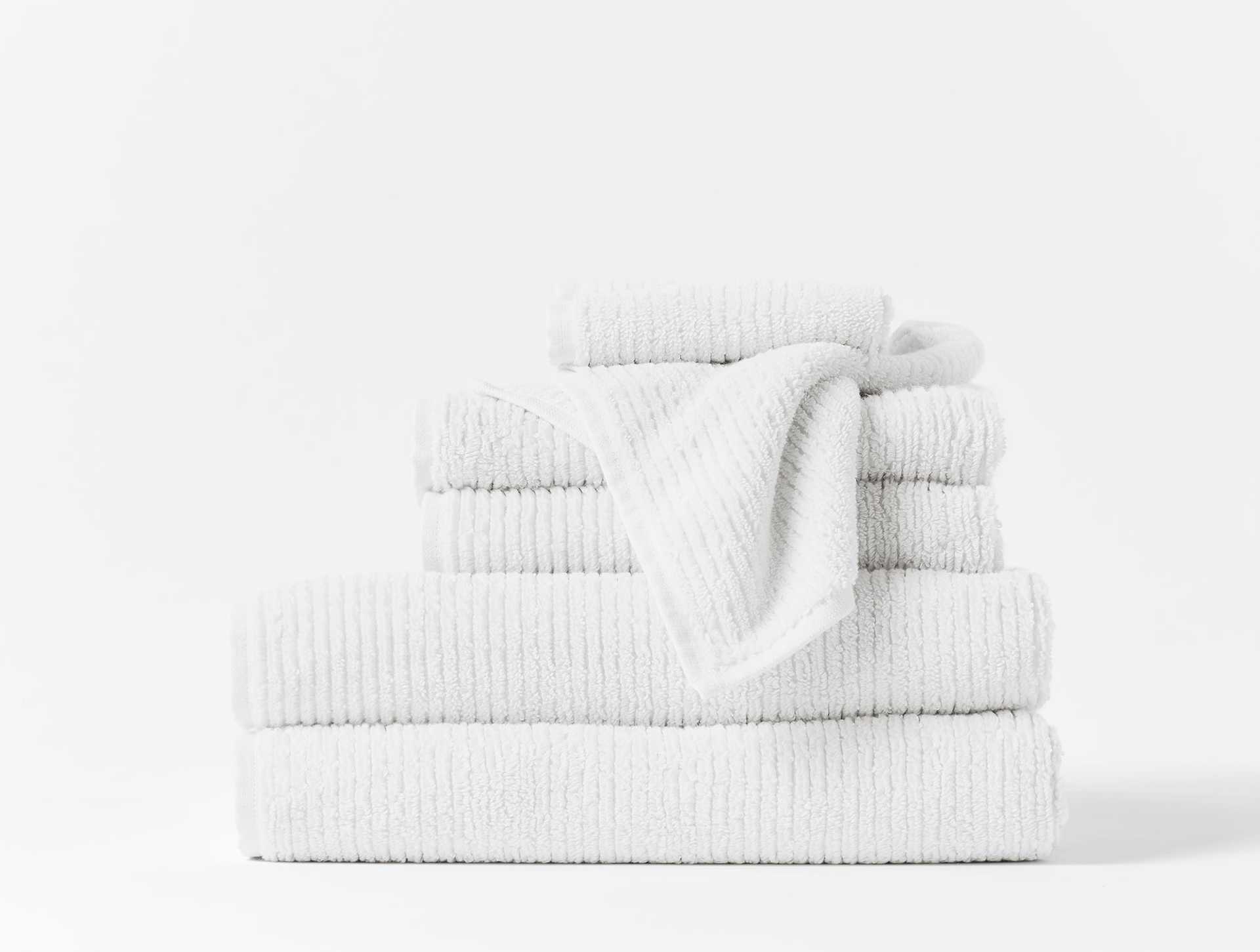
The Graccioza Villari towel provides a case study in how a plush surface can be paired with substantial fabric weight. It is made from 100% cotton, uses Zero Twist technology, and weighs 730 grams per square metre. Its design also includes a dimensional 3D effect, double stitching, rounded corners, and a pre-washed, pre-shrunk finish. Each feature tells part of the story; none alone can explain how a towel performs in every bathroom or climate.
What “zero twist” means in a towel
Cotton fibers are naturally short and fine. Spinning usually draws and twists them together to form yarn strong enough to weave or knit. Twist helps hold fibers in place, but it can also pull them into a tighter, more compact structure. Zero-twist yarn is made to preserve a more open arrangement of the cotton fibers. In terry cloth, where loops project above the base fabric, that openness can help produce a fuller, softer pile.
The distinction is about construction, not a promise that the towel is literally without structure. Terry loops still need to be formed and secured in the fabric. The towel must withstand handling, laundering, and the friction of daily use. “Zero twist” describes how the cotton is arranged in the yarn or loop system, while the overall durability also depends on the quality of the fibers, the way the fabric is woven, and how its edges and seams are finished.
Open loops create more space within the pile than a compact, tightly twisted structure may. That space contributes to a soft, lofty hand and gives water a network of fibers and surfaces to contact. It can also help explain why a zero-twist towel feels light and yielding despite having a substantial pile. But softness and absorbency are not properties that can be read from a single label alone. Fiber quality, loop height, pile density, finishing treatments, and laundering all influence the experience.
As cotton towels are used and washed, their performance can change. Residues from some fabric softeners, for example, may build up on fibers and reduce how readily water moves into the fabric. Detergent residue can also affect how a towel feels. A thoughtful wash routine helps preserve the towel’s natural capacity to absorb rather than coating it in a layer that changes its surface.
The role of 730 GSM
GSM means grams per square metre. It is a measure of fabric mass: a towel rated at 730 GSM weighs 730 grams for each square metre of its material. This number offers a helpful point of comparison among towels, but it does not measure softness, absorbency, drying time, or durability directly. It is one part of a larger description of the fabric.
Higher-GSM towels are generally heavier and may feel denser or more enveloping than lighter ones. Yet two towels with the same GSM can feel quite different. One may have long, open loops; another may have a compact pile. One may dry relatively quickly in a breezy, warm room, while another of similar weight may remain damp longer because of its structure, dimensions, or the conditions where it hangs. GSM describes the mass of the fabric, not the full behavior of the towel.
At 730 GSM, Villari sits within a substantial weight range. Its weight and zero-twist construction work together to create the impression of an abundant, plush pile. The fabric has material presence, while the open cotton structure is intended to keep the hand soft and airy rather than simply compact. Whether that balance feels right is personal: someone who enjoys a towel that wraps the body in a dense, cushioned surface may welcome it, while a person who prioritizes a very light towel may prefer a different construction.
Size matters, too. A bath sheet contains more fabric than a hand towel, and so its total weight can be greater even when both are made at the same GSM. Villari is available in several sizes, including washcloth, guest towel, hand towel, bath towel, and bath sheet formats. Comparing towels fairly means considering both the GSM and the dimensions rather than treating the weight figure as a stand-alone verdict.
How pile structure meets water
Absorbency is often described as a towel’s ability to take up water, but daily drying also depends on how the fabric meets the skin and how the user moves it. Terry loops create a three-dimensional surface, increasing the area of cotton available for contact. Water can move into and among the fibers through capillary action, aided by the way the yarn and loops are arranged. The exact amount a towel can hold and the pace at which it takes up moisture vary with its construction and condition.
Open cotton loops can contribute to a towel that feels airy and absorbent. A dense pile can also provide many fibers for contact, but density alone does not guarantee quick uptake or rapid drying. If a towel is very heavy or is hung folded over itself, moisture may take longer to evaporate. If air circulates freely around it, drying may be more efficient. Room humidity, ventilation, temperature, and how often the towel is used all play a part.
For comfortable drying, a towel does not need to be rubbed hard against the skin. Gentle pressing or patting allows the fabric to take up surface water while reducing friction. A plush pile can feel especially gentle in this routine, but people with sensitive skin may still prefer a lighter or smoother textile. Comfort depends on individual preference as much as on a technical specification.
Villari’s 3D design effect adds another layer to the surface. The dimensional pattern gives the towel visual and tactile variation, while the terry construction remains central to its function. Decorative texture is not a measure of hygiene or absorbency by itself; its practical meaning is best understood alongside the towel’s fiber content, pile, care instructions, and the way it is used.
Plushness and drying: a practical trade-off
A thick, soft towel can make a familiar routine feel more comfortable. It can also demand more room and time to dry than a lighter textile, especially when bathrooms are cool or poorly ventilated. That is not a flaw unique to zero-twist construction; it is a practical consideration for many substantial terry towels. A towel’s behavior after use is shaped by its total mass, its pile, how it is hung, and the air moving around it.
To encourage drying, spread a towel over a rail or bar rather than leaving it bunched or folded in a thick layer. Give it room on both sides so air can circulate. In a shared bathroom, assigning each person a separate towel and allowing it to dry between uses can help keep the routine orderly. A towel that remains persistently damp may need a better-ventilated place to hang, more frequent laundering, or a lighter-weight alternative suited to the room.
These choices illustrate why the “best” towel depends on context. In a spacious bathroom with a heated or well-ventilated rail, a 730 GSM towel may dry comfortably between uses. In a small, humid bathroom, an everyday towel with a lighter build could be easier to manage. For travel or a gym bag, packability and drying speed may matter more than a deep, enveloping feel. A household can reasonably use different towel types for different settings.
Consider how frequently the towel will be used, where it will hang, and how much laundry capacity is available. A plush bath towel can be satisfying after a long shower, but a lighter hand towel may be more convenient beside a busy sink. Matching textile weight to routine is a practical way to balance comfort with the work of washing and drying.
Care that preserves the feel
Villari is described as pre-washed and pre-shrunk, a finish intended to provide softness and help the towel retain its dimensions through ordinary care. Those treatments do not remove the need to follow the care label. For this towel, the stated instructions are to machine wash at 104°F, avoid bleach and dry cleaning, and tumble dry on a normal setting. The product information also lists ironing at 302°F; for most people, ironing terry loops is unnecessary, so the care label should guide any decision to do so.
As a general habit, wash towels before they are stored or put into regular rotation, and separate them from items that produce lint or have rough fasteners likely to snag loops. Use detergent according to its directions and the washing machine’s load size. Too much detergent can be difficult to rinse away, while overloading the drum may prevent fabrics from moving freely through water. A well-rinsed towel is more likely to maintain a clean, comfortable hand.
Fabric softener can leave a coating that affects how readily cotton absorbs water. If absorbency is important, consider using little or no conventional softener and observe how the towel responds. The effect varies by product and laundry routine, but avoiding unnecessary coatings is a simple way to keep the textile’s surface from accumulating residue. Bleach is not recommended for Villari; follow that instruction, particularly when caring for colored towels.
After laundering, remove the towel promptly and dry it fully. If using a tumble dryer, avoid leaving it in the drum after the cycle has finished. If line drying, hang it open in a place with good air circulation. The aim is not to force a particular finish, but to let the cotton dry without remaining damp for an extended period. Repeated high heat can be hard on many textiles over time, so use the care guidance and the lowest effective setting that gives a fully dry result.
Inspect hems and loops periodically. Double stitching, as used on Villari, helps reinforce the edges, but care still matters: snagged loops should be clipped rather than pulled, since tugging can draw more yarn from the fabric. Rounded corners and reinforced seams contribute to the towel’s finish, while gentle handling helps preserve its appearance through repeated use.
A close look at Graccioza Villari
Villari combines several construction and finishing choices in one cotton towel. The 100% cotton composition offers a familiar natural fiber; Zero Twist technology is intended to create open, airy loops; and the 730 GSM weight gives the fabric a substantial feel. Its 3D design adds surface dimension. Pre-washing and pre-shrinking prepare it for use, while double stitching and rounded corners are practical details at the edges.
These specifications describe what the towel is made to be, not a guarantee that every person will experience it in the same way. Hand feel varies with skin sensitivity, climate, water hardness, detergent, and how the towel has been washed. Absorbency can also change when a towel is new, when residue is present, or as fibers are worn down through use. The most useful comparison is often between towels used and cared for under similar conditions.
For readers interested in its materials and construction, the Graccioza Villari Towels page lists the towel’s specifications and care guidance. It can be considered alongside the questions that matter most in a household: Do you prefer a high, cushiony pile? Is there adequate space to hang a heavier towel? Does the washing routine suit a towel that benefits from thorough drying? The answers offer a more useful guide than a single number on a label.
Choosing by routine, not by number alone
When comparing bath towels, start with the experience you want and the setting where the towel will be used. A high-GSM towel may be appealing if softness, body, and a plush feel are priorities. A lighter, flat-woven towel may take less space in a cupboard and can be convenient for travel. Neither option is automatically more hygienic; regular laundering, complete drying, and avoiding shared use are more important to a clean routine than choosing one particular weave.
Then look beyond the weight. Check fiber content, construction, dimensions, finishing, and laundering directions. Long, open loops create a different tactile experience from a compact pile; linen and cotton blends behave differently from all-cotton terry; and a large bath sheet requires more drying space than a hand towel. The towel should fit both the person using it and the practical conditions of the home.
- For a plush hand feel: Consider pile structure, loop character, and fabric weight together rather than relying on GSM alone.
- For quicker drying in a small space: Look at lighter constructions and plan where the towel can hang fully open.
- For daily use: Check that the washing and drying instructions fit your household’s routine.
- For lasting performance: Avoid pulling loops, use detergent thoughtfully, and make sure the towel dries completely between uses.
- For a fair comparison: Compare similar sizes and consider how each towel has been laundered and stored.
Zero-twist cotton helps explain one particular balance: open loops can lend softness and loft, while a substantial fabric weight gives a towel a full, enveloping presence. In Villari, these elements meet at 730 GSM, with reinforcing details and a textured design completing the construction. The result is best understood not as a number or a promise of universal performance, but as a set of choices shaped around comfort and absorbency.
The everyday science of a soft landing
For a moment after bathing, the towel is where textile engineering meets the ordinary needs of the body. Cotton loops draw in moisture; a soft pile cushions the touch; a seam holds the edges together through cycles of washing and drying. The process is quiet, repeated each day, and easy to overlook. Yet small differences in fiber arrangement and fabric mass can change how that routine feels.
Understanding zero-twist construction makes it easier to interpret the language on a towel label. Open cotton fibers can contribute to a soft, airy pile. GSM indicates weight per area, not a complete measure of absorbency or drying speed. And a towel’s life depends partly on the environment around it: airflow, laundering, and the space available to dry all matter.
Graccioza Villari brings those details into focus. Its zero-twist cotton, 730 GSM weight, 3D surface, and reinforced finish make it a useful example of a plush terry towel designed to balance softness with practical use. Whether that balance is right for a particular bathroom depends on more than a touch at the edge of the fabric. It depends on how the towel feels on the skin, how it dries on the rail, and how well its care fits the rhythms of home.